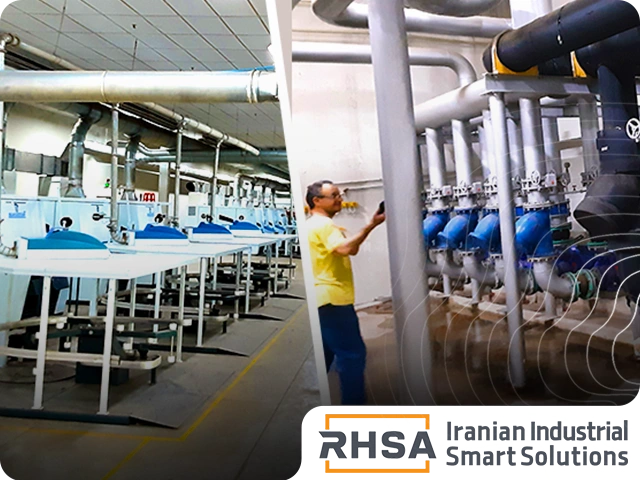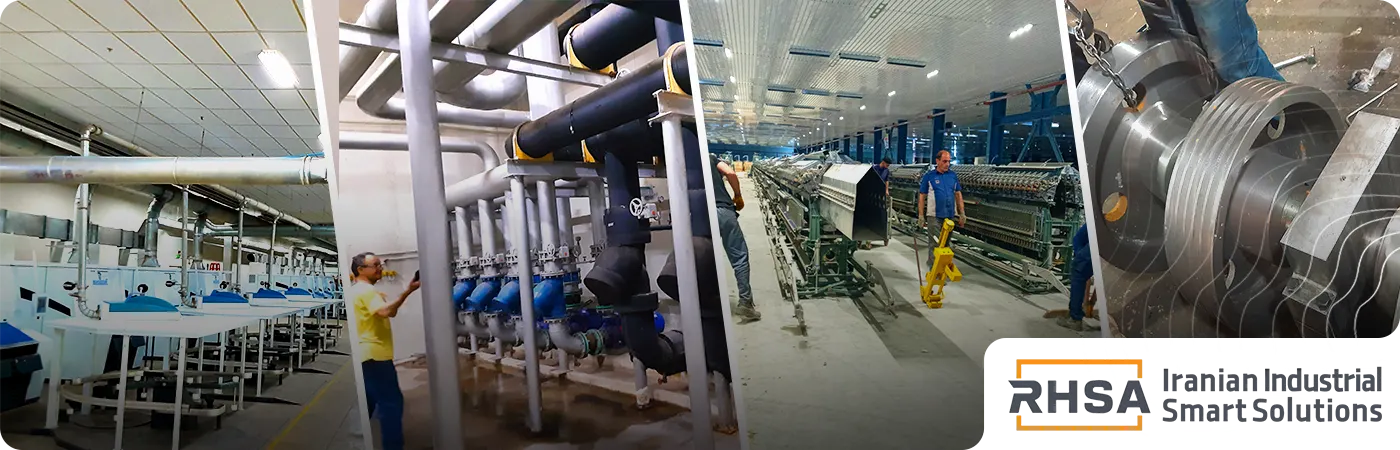
Our engineering team calculates the capacity and energy requirements of textile production lines by conducting comprehensive technical studies. Industrial electricity, compressed air required for textile machine operation, and compressed air supplied by compressors are carefully determined based on production and equipment specifications. The location of each energy source is determined based on the minimum transmission path and maximum efficiency. The goal is to reduce energy waste, increase production safety and sustainability. All designs are documented and prepared for implementation in the factory.
Sustainable energy, optimal production
A detailed analysis of air flow, humidity and temperature in production halls is carried out to maintain product quality and employee health. Ventilation equipment is selected according to production volume, hall height and process type. Installation points, duct routes and air flow rates are determined with simulation software. The design of the return duct plan in production halls ensures that ventilation is uniform and in accordance with industry standards. This design increases the life, productivity and product quality of the equipment and improves the working conditions of employees.
Fresh air, professional production
Based on the production line needs and expected capacity, spinning machines are selected by reviewing the technical specifications. The balance and installation order of the machines in the production line are carefully calculated to reduce stops and losses. Selecting the right machine type and speed for each line ensures production optimization and energy consumption reduction. Our team identifies critical points and production bottlenecks by simulating the line performance and provides improvement solutions.
Precise spinning, unparalleled quality
The design of weaving lines includes the selection of the type of warp and weft or circular looms and the calculation of production capacity. Speed, fabric quality and compatibility with other production units are examined. Ancillary equipment including fabric transfer systems, quality control along the line and precise mechanical settings of the machines are determined. The design goal is to increase production efficiency and reduce process errors.
Smart weaving, high-quality fabric
Fabric finishing and dyeing operations are designed with detailed technical analysis. The type of machinery, material flow path are determined to ensure the final quality of the product. The capacity of each section and how it is connected to the pre- and post-production lines are planned. The design includes temperature, humidity control systems and precise process timing to maintain efficiency and product uniformity.
Professional color and finish, unrivaled quality
Based on the volume and type of product, industrial sewing and quilting machines are selected and their capacity is determined. The installation points and arrangement of the machines are designed to facilitate the flow of materials and reduce production time. Technical training of employees and the establishment of a quality control system along the line are included to maintain production standards. This design increases productivity, reduces waste and optimizes energy consumption.
Precise stitching, perfect product
The compressed air requirement for all production units is determined and the compressor capacity is calculated. The air distribution network, valves and machine connection points are carefully determined. Technical studies are carried out to reduce pressure drop, optimize energy consumption and prevent production stops. The compressed air system design ensures that all lines operate without interruption and with high efficiency.
Compressed air, reliable production
Laboratory equipment selection includes fiber and yarn testing machines, fabric, dyeing and finishing. The installation location and flow of samples in the laboratory are designed based on the production process. Quality control is ensured at all stages of production by determining critical points and precise instruments. The goal is to reduce waste, increase product quality and ensure compliance with national and international standards.
Strict control, guaranteed quality
Production line layouts, equipment deployment plans, and technical drawings are prepared comprehensively. Pilot samples are designed and implemented for practical testing of processes. The R&D team optimizes the lines and eliminates possible defects before final installation. This stage ensures that the production line is set up in a standard, safe, and efficient manner.
Smart design, flawless production
The careful selection of the type and brand of machinery appropriate to the production process, product quality and factory operating conditions is the basis of professional and sustainable production. Our engineers, by examining the world's leading brands, technical specifications and operational capabilities of each machine, suggest the best option for the actual needs of the production line. This process ensures that each machinery is efficient, reliable and suitable for your manufactured products.
Accurate machine selection, the beginning of smart production
The fit between the capacity of the machines and the market demand is one of the basic principles of designing and purchasing machinery. Selecting the appropriate capacity based on engineering studies and market demand analysis provides the most optimal combination of production, cost, and efficiency. This study includes determining the operational throughput, speed of operation, and the ability to respond to production fluctuations in different periods.
Precise capacity, maximum efficiency
Modern machinery with intelligent automation and digital control improves product quality and production accuracy. Selecting equipment with up-to-date technology and checking on-site support capabilities helps reduce human errors and increase productivity. Our team provides the best option by analyzing new technologies and adapting them to the factory infrastructure.
Today’s smartness, tomorrow’s success
Energy consumption constitutes a major part of a factory's fixed costs. Choosing high-efficiency machinery and designing it with optimal energy consumption not only reduces costs, but also has a positive impact on the environment and the economic sustainability of the factory. Our engineers ensure minimal energy waste by analyzing energy consumption and optimizing operation.
High efficiency, low consumption
Access to reliable after-sales service and technical support plays a vital role in maintaining production and preventing sudden stops. Quality of service, availability of spare parts, operator training and prompt response from the manufacturer are the main indicators when choosing machinery. These services ensure that the productivity of the production line always remains at the desired level.
Reliable support, non-stop production
Safe and accurate transportation of machinery requires engineering planning based on the weight, dimensions, and type of equipment. Our team determines the transportation routes, required equipment, and safety measures to ensure that the slightest damage is not caused to the equipment and the transportation process is carried out without stopping or disruption.
Safe transfer, safe production start
Before moving, the machines are thoroughly inspected, calibrated and tested to ensure optimum performance after installation. This includes initial mechanical and electrical adjustments, checking of peripherals and documentation of operating parameters. Our goal is to ensure proper operation and reduce start-up time after installation.
Precise adjustment, trouble-free setup
After delivery, the equipment is assembled and installed in accordance with industry standards. This includes connecting components, checking compliance with technical drawings, and initial mechanical performance tests. The careful execution of this stage provides the basis for stable operation and reduces failures due to incorrect installation.
Professional assembly, continuous production
Commissioning electrical and automation systems includes cabling, installing controllers, and testing the performance of intelligent systems. Our team ensures that all sensors and controls are functioning properly, enabling optimal and sustainable operation.
Power and intelligence in one system
After installation, As-Built drawings and complete technical documentation are prepared so that operations and maintenance units can easily use and manage the equipment. This documentation includes routes, settings, and technical details that will help upgrade the systems in the future.
Complete documentation, easy to use
Continuous employee training, including safety, operation, maintenance and preventive maintenance of equipment, is an integral part of the installation of production lines. Our team provides practical and applied training to improve the level of technical knowledge of personnel and ensure the productivity of the production line.
Vocational training, sustainable production
After the equipment is fully installed and commissioned, the production process begins under the supervision of the technical team to ensure that the desired capacity, product quality and operational standards are met. By closely monitoring performance, eliminating potential defects and continuously controlling quality, our team ensures that the final product is ready for delivery to the customer and that all production goals are met with maximum efficiency.
Reliable production, perfect delivery
In this method, all machinery is serviced and inspected according to a scheduled schedule to prevent sudden breakdowns. The PM program is designed by analyzing the performance data of the machines to provide maximum efficiency and minimum downtime. This process includes timely replacement of consumable parts, specialized lubrication, and control of the operating temperature of the equipment.
Smart prevention, ensuring production sustainability
Continuous inspection of mechanical, electrical and automation equipment is carried out with the aim of identifying hidden defects before failure occurs. This process uses precise vibration, temperature, pressure and oil analysis instruments to assess the overall health of the equipment. This action is the basis for making decisions for timely repairs and preventing production stops.
Continuous monitoring is the key to peace of mind in production.
All information on repairs, services, breakdowns and downtimes is recorded and analyzed in specialized maintenance software. This data helps technical managers to monitor equipment performance and plan more accurately for the future. Accurate documentation provides transparency in decision-making and facilitates industrial audits.
Accurate information, smart decision-making
Workshop services such as grinding, pressing, taping and roller rebuilding are key factors in maintaining quality and accuracy in textile machinery. Our technical team, with complete and standard equipment, performs fully engineered parts rebuilding operations to keep the machinery at the highest level of performance. These activities play an important role in increasing the useful life of the machines and reducing downtime costs.
Smart Reconstruction, Reviving Production Capacity
Our team of electrical and control specialists is responsible for servicing and optimizing electrical panels, controllers, sensors, and communication networks. This includes checking for fluctuations, resetting controllers, and ensuring full coordination between electrical and mechanical components. The stability of control systems plays a direct role in reducing errors and increasing production safety.
Power and control stability, guaranteeing production continuity
Smart spare parts management includes identifying periodic needs, sourcing standard parts, and designing custom parts based on the needs of the production unit. Our team, in collaboration with domestic and international manufacturers, provides the required parts in the shortest possible time and with guaranteed quality. This approach prevents production line downtime and minimizes warehousing costs.
Ready-made parts, non-stop production line